
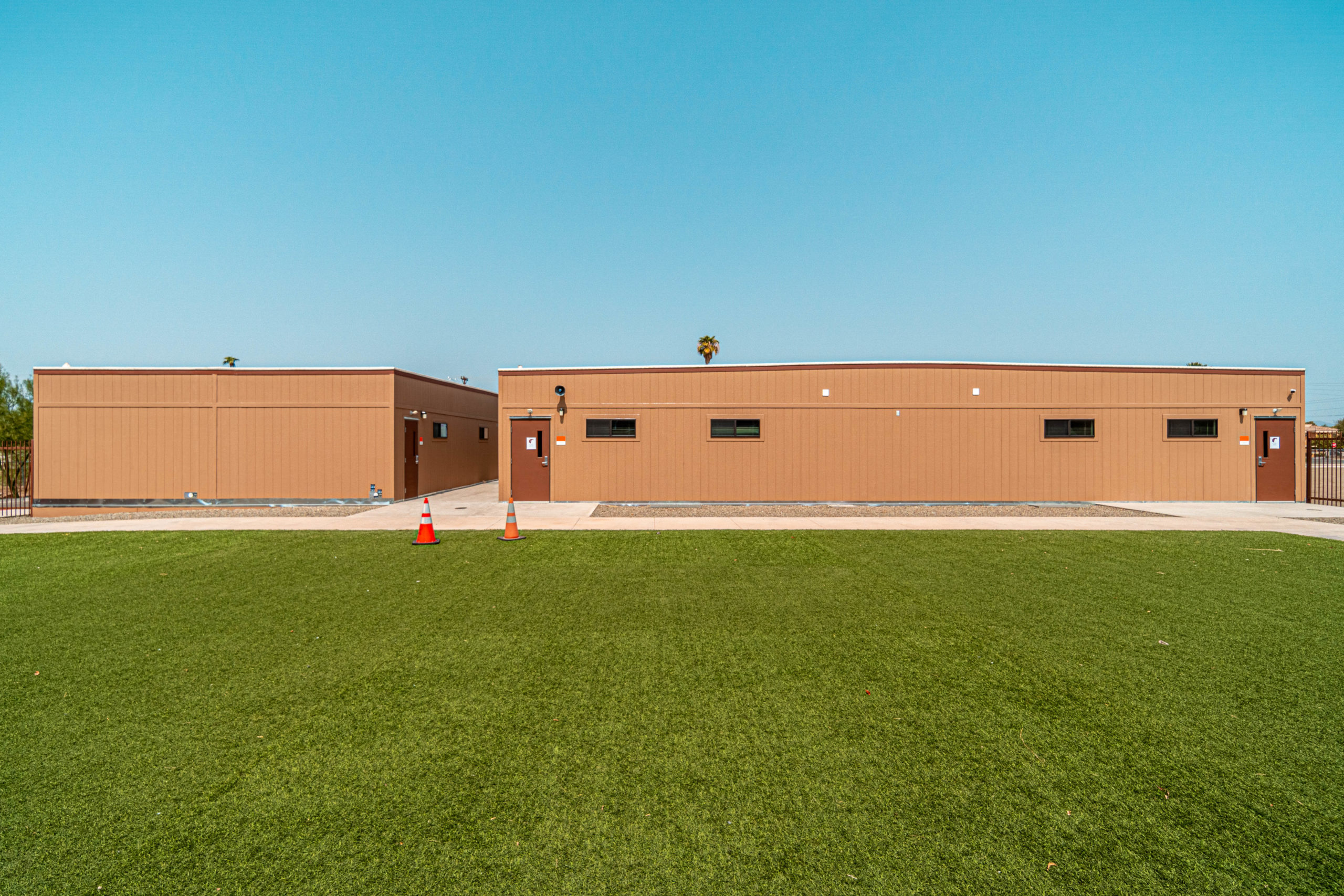
Arizona’s student population continues to grow. New residential developments across the Phoenix metro, Tucson, and the state’s rapidly expanding communities are bringing thousands of new families and their children into school districts that are already stretched for space. At the same time, ageing school buildings need renovation, and the funding environments that schools operate within rarely allow for the kind of extended, expensive traditional construction projects that growing enrolment demands.
Modular classrooms have moved from a stopgap solution to a strategic choice for Arizona educational institutions and in 2026, that shift is accelerating. This guide covers why, what modular classrooms actually deliver, and what Arizona schools and institutions should know before making a decision.
The Arizona School Space Challenge in 2026
Growing Enrolment, Constrained Timelines
Arizona’s population growth has been one of the most consistent in the nation for the past decade, and the educational implications of that growth are felt directly by school districts and charter schools across the state. Enrolment increases of 10%, 20%, or more within a single fiscal year are not unusual for schools in high-growth communities and traditional construction cannot respond to that pace.
A traditionally constructed classroom building takes 18 to 24 months from planning through occupancy in a best-case scenario. Students arrive in September regardless of whether the building is ready. The mismatch between traditional construction timelines and the reality of school enrolment growth is one of the most fundamental drivers behind Arizona’s adoption of modular classroom solutions.
Modular classrooms change this equation. With fabrication happening off-site in parallel with site preparation, modular classrooms can be delivered and ready for occupancy in a fraction of the time that traditional construction requires in many cases, within a single planning cycle rather than across multiple years.
The Renovation Problem
Enrolment growth is one driver. The renovation of ageing school facilities is another. When an existing school building needs significant renovation electrical upgrades, accessibility improvements, structural repairs the students who normally occupy those spaces need somewhere to go. Traditional construction offers no good answer to this; portable trailers have historically been the default, with all the quality and functionality limitations that implies.
Modular classrooms provide a genuinely functional temporary solution for renovation displacement buildings that maintain the learning environment quality that students and teachers expect, for however long the renovation takes, and that can be removed or relocated when the permanent facility is ready.
What Modular Classrooms Actually Are and What They’re Not
Beyond the Portable Classroom Stereotype
The word “portable” carries baggage in educational settings thin walls, inadequate temperature control, ageing units that feel like afterthoughts rather than genuine learning environments. Modern modular classrooms are a fundamentally different product from the portable classrooms of previous decades, and the distinction matters for schools evaluating their options.
Adaptive Shelters’ modular classrooms in Arizona are engineered structures that meet Arizona’s building codes for educational occupancy. They are properly insulated for Arizona’s climate maintaining appropriate interior temperatures across summer heat and winter temperature drops. They have appropriate electrical systems for modern educational technology sufficient circuits for computers, projectors, and other classroom technology. They are accessible in compliance with ADA requirements. And they are designed to look and feel like genuine classrooms, not temporary afterthoughts.
The student experience in a well-specified modular classroom is not materially different from the experience in a traditionally constructed classroom. The teacher’s experience is not materially different. The learning environment acoustically, thermally, and functionally meets the standards that educational quality requires.
Temporary, Permanent, and Everything Between
One of the most useful aspects of modular classrooms is their flexibility across the temporary-permanent spectrum. A school that needs additional classrooms for two years while a permanent building is under construction can lease modular units for that period and return them when the permanent facility opens. A school that needs permanent additional capacity but wants to achieve it faster and at lower cost than traditional construction can purchase modular classroom buildings designed for permanent installation.
This flexibility means that the modular decision is not a single choice between temporary and permanent it is a spectrum of options that can be matched to the specific circumstances of each school’s situation.
The Cost Reality of Modular Classrooms in Arizona
What Schools Actually Pay
Construction cost is always a central concern for Arizona schools operating within fixed budgets and fiscal year constraints. Modular classroom construction can cost up to 30% less than comparable traditionally constructed space a saving that comes from the manufacturing efficiencies of off-site fabrication, the reduced site work required, and the faster project timeline that compresses carrying costs.
For schools working within bond measure allocations, state funding formulas, or grant-funded capital improvement programmes, the cost advantage of modular construction can mean the difference between a project that fits within available funding and one that doesn’t. It can also mean that the same budget delivers more classroom space a meaningful outcome when enrolment growth is outpacing what traditional construction could address.
Leasing provides an additional financial pathway for schools that need space but don’t have capital funding available for a purchase. Operating budget expenditure on a modular classroom lease is a different accounting treatment from capital expenditure on a permanent building one that fits within different funding streams and approval processes. For charter schools and smaller private educational institutions in particular, the leasing option makes modular classroom access possible without a capital funding cycle.
The Timeline Advantage in Financial Terms
The 40% faster occupancy rate that modular construction delivers has direct financial implications for schools beyond the construction cost itself. Every month that students are in inadequate space overflow into gymnasiums, libraries repurposed as classrooms, split schedules to manage enrolment has a cost in educational quality and operational complexity. Faster delivery of functional classroom space has a real value that goes beyond the construction budget line.
2026 Trends Driving Modular Classroom Adoption in Arizona
Technology Integration as a Standard Expectation
Modular classrooms in 2026 are being specified with technology infrastructure that matches what new traditionally constructed classrooms provide robust electrical systems, data connectivity, appropriate lighting for screen-based learning, and acoustic treatments that support both in-person and hybrid learning models.
Schools that dismissed modular classrooms in previous years because they fell short on technology infrastructure are finding that the current generation of modular educational buildings meets their requirements and that the faster delivery and lower cost advantages remain fully intact.
Sustainability and Environmental Considerations
Modular construction’s sustainability credentials have become increasingly relevant to Arizona school districts and institutions that have adopted environmental commitments or that are subject to sustainability requirements in their capital planning frameworks.
Factory fabrication reduces material waste compared to traditional construction materials are specified and cut precisely, with minimal site waste. The controlled manufacturing environment supports consistent quality without the material degradation that on-site storage can cause. And the potential for modular buildings to be relocated and reused rather than demolished at the end of their service life supports a more circular approach to construction than traditional building allows.
Speed as a Competitive Advantage for Charter Schools
Arizona’s charter school sector is one of the most active in the country, and charter schools face particularly acute space challenges growing enrolment in competitive markets, limited access to traditional school facilities, and the need to establish physical presence quickly in new communities.
Modular classrooms provide charter schools with a path to professional, functional educational space that can be deployed on a timeline that matches their growth rather than waiting for traditional construction processes that their competitive situations cannot accommodate. Several Arizona charter schools have used modular construction to establish or expand their physical presence faster than competitors, maintaining their enrolment momentum in the process.
The Professional Sports and Events Sector Influence
An interesting cross-sector trend in Arizona’s modular construction market has been the influence of high-profile non-educational deployments on perceptions of modular quality. When professional sports organisations, luxury resorts, and major corporate clients choose modular construction for high-visibility projects as reflected in Adaptive Shelters’ own client roster the quality and aesthetic standards those clients demand elevate the general expectation of what modular construction delivers.
Educational institutions evaluating modular classrooms in 2026 are doing so in a context where the category’s quality credentials have been established by demanding commercial clients which is changing the conversation from “are modular classrooms acceptable?” to “which modular classroom solution best fits our specific needs?”
What Arizona Schools Should Evaluate When Choosing a Modular Classroom Provider
Experience with Educational Projects
Not all modular construction providers have genuine depth of experience with educational projects. Schools should evaluate whether a provider has completed projects of comparable scale and complexity, has familiarity with the specific code requirements for educational occupancy in Arizona, and can provide references from comparable educational clients.
Adaptive Shelters has served Arizona educational institutions from individual charter schools to large school districts including the charter school that needed additional classroom space within a six-month timeframe when enrolment increased by 28%, delivered on time and within budget. That kind of track record in educational projects is meaningfully different from general modular construction experience.
Lease vs Purchase Analysis
Schools should approach the lease-versus-purchase decision with a clear analysis of their specific situation the duration of the need, the availability of capital versus operating funding, the likelihood that the space requirement will change, and the long-term master plan for the campus. A provider that helps schools think through this analysis honestly rather than simply pushing toward whichever option generates the larger transaction is a more valuable partner.
Timeline Certainty
For schools, timeline is not a preference it is a constraint with real consequences. Classrooms that aren’t ready for the start of term create problems that cascade through the entire school year. Evaluating a modular classroom provider’s track record on delivery timelines not just their stated capabilities but their actual performance on comparable projects is essential due diligence.
Getting Started with Modular Classrooms in Arizona
Adaptive Shelters serves Arizona educational institutions with modular classroom solutions ranging from single units to full school campuses on lease or purchase terms, for temporary or permanent applications, with the design, engineering, and installation expertise to deliver projects on the timelines that schools require.
The process begins with a consultation that covers the school’s specific timeline, enrolment situation, site conditions, and budget before any recommendation is made. For schools facing upcoming enrolment challenges or facility constraints, the earlier that conversation begins, the more options are available.
To request information or begin a consultation, visit adaptiveshelters.com or contact the Adaptive Shelters team directly. One call covers the full scope of what the team can deliver.
Frequently Asked Questions
The timeline depends on the scope of the project the number of units, the level of customisation, and the site preparation required. Modular classrooms can typically be delivered and ready for occupancy significantly faster than traditionally constructed buildings in many cases within the timeframe of a single school planning cycle. Contact Adaptive Shelters with your specific timeline and project details for a realistic delivery assessment.
Yes Adaptive Shelters’ modular classrooms are engineered and fabricated to comply with Arizona building codes for educational occupancy, including accessibility requirements and the mechanical, electrical, and structural standards that apply to school buildings. Code compliance documentation is provided as part of the project delivery.
Yes modular classrooms can be designed to connect to existing structures through covered walkways, corridors, or direct building connections depending on the site and the project’s requirements. The design phase addresses connectivity as part of the overall campus integration plan.
At the end of a lease period, modular classrooms are returned to Adaptive Shelters. The removal process is coordinated to minimise disruption to the school’s operations. Schools that find their needs have become permanent during the lease period can discuss converting to a purchase arrangement.
Both. Modular classrooms can be installed as permanent educational buildings properly permitted, connected to utilities, and designed for long-term use or as temporary facilities for specific duration needs. The distinction affects the specification, permitting approach, and financial structure of the project. Adaptive Shelters advises on the appropriate approach based on each school’s specific situation.
Yes Adaptive Shelters handles projects ranging from single classroom units to entire school campus expansions. The team’s experience spans small charter school additions through large district-level projects, and the company has the capacity and supply relationships to deliver at scale. No project too big or small is the genuine operating principle.