
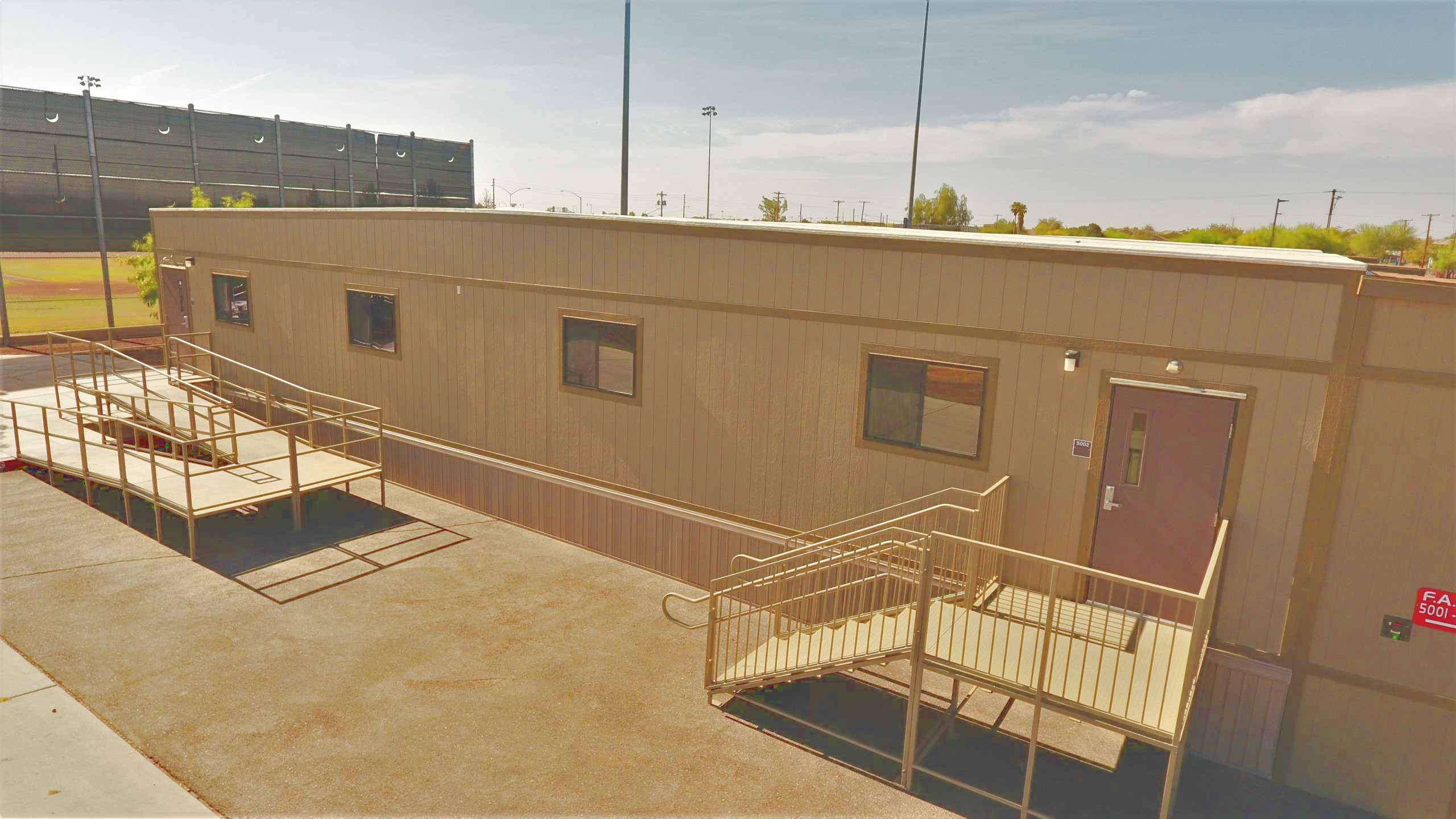
Enrollment growth doesn’t wait for a construction timeline. When a school district or charter school suddenly needs more classroom space whether from unexpected enrollment increases, a new program launch, or aging facilities that need replacing traditional construction timelines often can’t keep pace with the actual need. Modular classrooms have become the practical solution for Arizona schools facing exactly this kind of time-sensitive expansion.
Here’s what school administrators and district procurement staff need to know about the process.
Why Schools Turn to Modular Classroom Solutions
Traditional classroom construction can take a year or more once permitting, design, and site-built construction are all factored in a timeline that rarely aligns with the reality of enrollment growth, which often becomes clear only a few months before a new school year begins. Modular classrooms in Arizona solve this fundamental mismatch by compressing the timeline dramatically, since classroom units are constructed off-site in parallel with any necessary site preparation, rather than waiting for sequential on-site construction to unfold.
Portable Classrooms vs. Modular Classrooms: An Important Distinction
It’s worth clarifying a common point of confusion. Portable classrooms in Phoenix, AZ and modular classrooms are sometimes used interchangeably, but modern modular classroom construction has evolved well beyond the basic, often lower-quality portable units many people picture. Today’s modular classrooms are built to the same educational facility codes and standards as traditional classroom construction, with the same durability, insulation, and long-term usability the difference is purely in how and where the building is constructed, not in the quality or code compliance of the finished space.
The Modular Classroom Process for Schools
1. Needs Assessment and Planning
The process starts with understanding exactly what the school needs how many classrooms, what capacity, any specialized space requirements (science labs, special education needs, administrative space), and the realistic timeline the district or school is working with.
2. Design and Code Compliance Review
Modular classroom layouts are designed to meet Arizona’s educational facility codes and any district-specific requirements, ensuring the finished space integrates seamlessly with the school’s existing facilities and complies with all applicable building and safety codes.
3. Factory Construction
While site preparation happens at the school (if needed), the classroom modules themselves are constructed in a factory setting, allowing this phase to proceed regardless of weather or seasonal construction constraints that might otherwise slow down a traditional build.
4. Delivery and Assembly
Completed modules are transported to the school site and assembled, with utility connections, finishing work, and final inspections completed on-site to bring the classrooms to full operational readiness.
5. Final Inspection and Occupancy
Once assembled and inspected, the classrooms are ready for use often within a fraction of the time a comparable traditional construction project would require from start to finish.
Real Results: A Phoenix Charter School Case Study
The impact of this approach isn’t just theoretical. We recently worked with a Phoenix-area charter school facing a 28% enrollment increase that far outpaced their existing classroom capacity. Working within a six-month delivery window, our modular classroom solution allowed the school to accommodate its growing student population without turning away enrollment or overcrowding existing classrooms a timeline that would have been extremely difficult to achieve through traditional construction given typical permitting and build schedules.
School Modular Buildings Arizona: What Districts Should Know
For school modular buildings in Arizona, working with a provider experienced specifically in educational facility requirements matters significantly. Classroom spaces have specific code requirements around occupancy, accessibility, safety systems, and educational-specific infrastructure that differ from general commercial modular applications. Choosing a provider without this specific experience can create compliance gaps that delay occupancy or require costly rework after the fact.
Classroom Expansion Modular Solutions: Temporary or Permanent
Classroom expansion modular solutions can be structured as either temporary or permanent installations, depending on the district’s specific needs. Temporary classrooms work well for addressing short-term enrollment surges or providing space during a permanent facility renovation, while permanent modular classroom installations offer a long-term expansion solution built to the same durability standards as traditional construction, without the extended timeline.
Budgeting Considerations for School Districts
School districts and charter schools operate under specific budget cycles and procurement processes, and modular classroom solutions can often be structured to align with these realities whether that means leasing classroom space to manage cash flow during a budget cycle, or purchasing modules outright as part of a longer-term facilities plan. Understanding these options upfront helps districts choose the structure that best fits their specific financial planning process.
Why Timing Matters So Much for Schools
Unlike many commercial construction projects, school facility needs are tied directly to the academic calendar a classroom that isn’t ready by the start of the school year creates real disruption for students, teachers, and families, not just an administrative inconvenience. This is exactly why the compressed timeline modular construction offers matters so much in the education sector specifically, where “close enough” to the deadline often isn’t good enough.
Working With a Provider That Understands Arizona Schools
Beyond classrooms, many schools also need supporting facilities during expansion projects from administrative office space to secure storage for equipment and supplies during construction phases. Working with a single provider experienced across these related needs can simplify logistics for a busy district facilities team managing multiple moving pieces at once.
Facing an enrollment surge or planning ahead for classroom expansion? Reach out to our team to discuss a timeline that actually works for your school’s needs.
Frequently Asked Questions
Timelines vary based on project scope, but modular classroom projects are generally completed in a fraction of the time traditional construction would require, often within months rather than a year or more.
Yes. Modern modular classrooms are built to the same educational facility codes and standards as traditional site-built classrooms, with no compromise on code compliance or safety requirements.
Yes, leasing is a common option for schools managing enrollment fluctuations or working within specific budget cycles, offering flexibility that a permanent purchase doesn’t provide.
Yes, modular classroom design can accommodate specialized educational spaces, though it’s important to communicate these specific needs clearly during the planning and design phase.
Modular classroom systems offer flexibility for future adjustments, whether that means adding additional units as enrollment grows further or relocating temporary units if space needs change.