
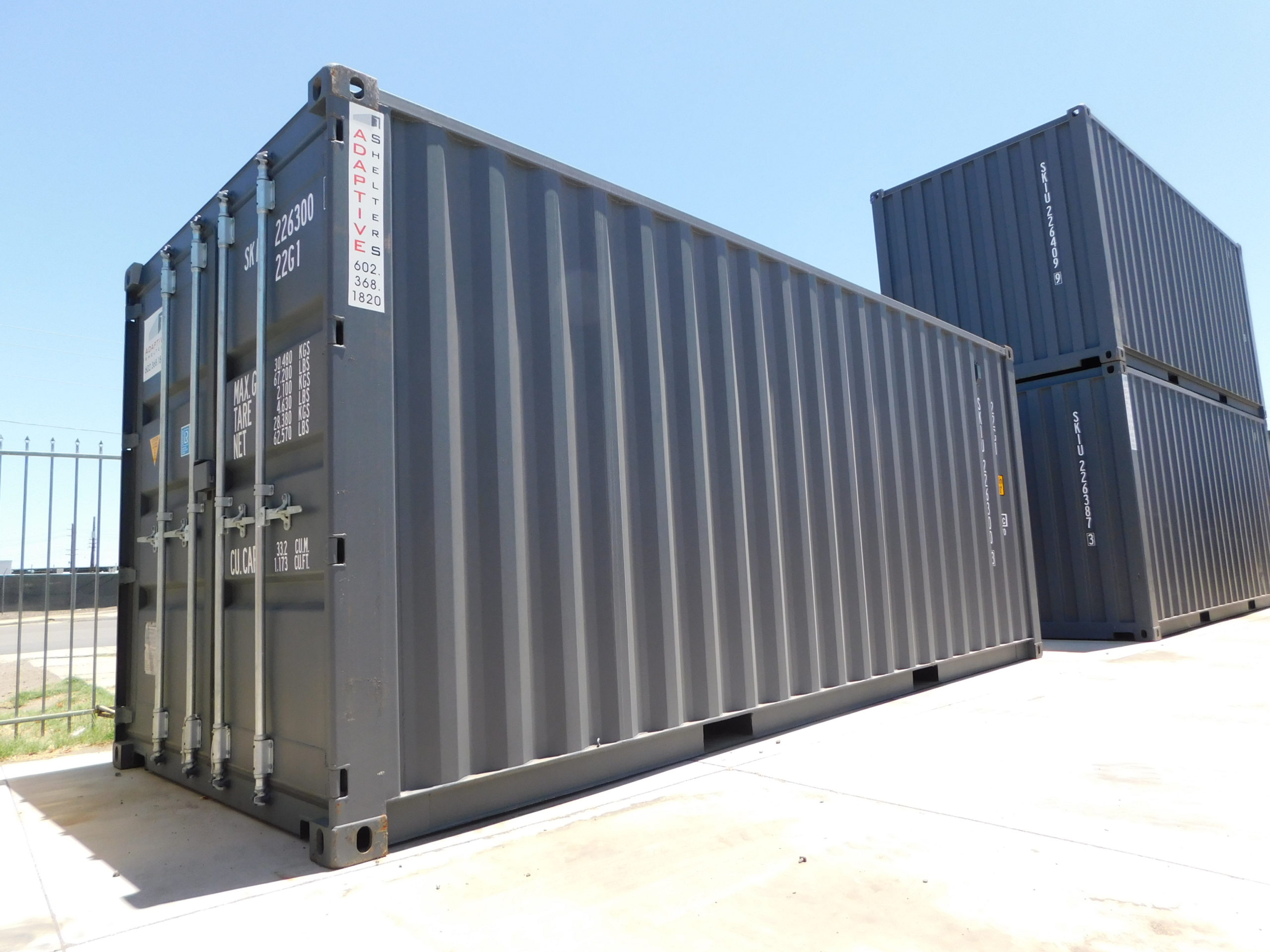
Every Arizona business that needs a storage container eventually faces the same decision: rent or buy?
It sounds like a simple financial question. It is not. The right answer depends on how long you need the container, what you plan to use it for, how your cash flow is structured, whether your storage requirements are likely to change, and what your exit looks like when the need ends.
Get the decision right and you optimise both cost and flexibility for your business. Get it wrong and you either overpay on cumulative rental costs for a need that was permanent, or tie up capital in an asset that sits idle after your project ends.
This guide gives you the complete framework for making the rent versus buy decision for your specific Arizona business situation with honest cost comparisons, the scenarios where each option wins, and the questions that cut through the noise quickly.
Why This Decision Matters More Than It Appears
Most businesses approach the rent versus buy decision as a simple monthly cost comparison. That framing misses most of what actually determines which option delivers better value.
The true comparison involves the total cost of each option over your actual usage period including purchase price, delivery, any modifications, resale value at exit, and the opportunity cost of capital tied up in a purchased asset versus deployed elsewhere in the business.
It also involves less quantifiable factors: flexibility to change your storage configuration as needs evolve, the administrative burden of owning versus renting, and the risk profile of each option if your business situation changes unexpectedly.
A contractor whose project extends by four months needs to know that a rented container can simply stay on site no additional decision required. A business owner who purchased a container and no longer needs it after eighteen months needs to manage resale, which takes time and effort and may not recover the full purchase price.
Neither option is universally better. Both are genuinely right for different situations. The goal of this guide is to make sure you end up in the right one.
The Real Cost of Renting a Storage Container in Arizona
Rental pricing for storage containers in Arizona varies based on container size, condition, duration of rental, and specific site delivery requirements. Rather than quoting specific figures that may not reflect your situation, understanding what drives rental cost is more useful.
Size is the primary pricing driver. A 10-foot container rents for significantly less per month than a 40-foot container. However, the cost per square foot of storage typically decreases as container size increases a 40-foot container at twice the monthly cost of a 20-foot unit gives you double the storage for the same price per square foot.
Rental duration affects monthly rate. Committing to a defined rental term three months, six months, twelve months typically delivers a lower monthly rate than a pure month-to-month arrangement. If your timeline is reasonably certain, committing upfront usually saves money over the rental period.
Container condition affects price. New or one-trip containers command premium pricing. Cargo-worthy used containers offer sound performance at lower cost. Wind-and-watertight units which are weatherproof and secure but may not meet full shipping certification are the most economical option for businesses whose requirement is ground-based storage rather than active shipping.
Delivery cost is additional. Delivery to your Arizona site is typically charged separately from the monthly rental rate. Distance from inventory, site access conditions, and positioning complexity all affect delivery cost.
The cumulative rental calculation. The number that matters most in the rent versus buy comparison is total rental expenditure over your expected usage period. A container rented for twelve months at a given monthly rate plus delivery and retrieval costs is your true rental cost. Compare this to the all-in purchase price and the decision starts becoming clear.
The Real Cost of Buying a Storage Container in Arizona
Purchasing a storage container involves a different set of cost components that require honest accounting.
Purchase price by condition. New containers carry the highest purchase price but arrive in pristine condition with maximum remaining lifespan. One-trip containers used once for an overseas shipment and then sold offer near-new condition at a meaningful discount. Cargo-worthy used containers are the mid-market option: sound, weatherproof, functional, and priced accordingly. As-is containers are the most economical purchase option but may require inspection and potentially some repair before use.
Delivery to your site. Like rental, purchased container delivery is typically a separate cost. This is a one-time expense rather than ongoing, but it needs to be included in the true purchase cost calculation.
Modification costs. If you need shelving, lighting, a lock box security upgrade, ventilation, or climate control, these modifications are a cost that belongs in the purchase calculation. For rented containers, some modifications may be available through the rental provider; for purchased containers, modification is your responsibility and your investment.
Ongoing maintenance. Purchased containers are your asset and your maintenance responsibility. For a well-maintained steel container in Arizona’s climate, annual maintenance requirements are modest primarily keeping door seals in good condition, treating any surface rust promptly, and ensuring proper drainage around the container base. This is not a large cost but it is a real one.
Resale value. This is the cost component that distinguishes container purchases from most equipment purchases steel containers hold value relatively well. A container purchased today and resold in three years will recover a meaningful portion of its purchase price, particularly if it has been well maintained. This residual value materially improves the true cost of ownership when the full lifecycle is accounted for.
Buy shipping containers through Adaptive Shelters with the option to hand-select your unit which matters for businesses where container condition affects how the asset reflects on their operation.
The Break-Even Point: When Buying Becomes Cheaper Than Renting
The core financial question in the rent versus buy decision is: at what point does the cumulative rental cost exceed the purchase price?
This break-even point varies based on the specific rental rate and purchase price for your container size and condition, but the general principle is consistent across the market.
For most standard container sizes in Arizona, the break-even point where cumulative rental payments equal the purchase price of an equivalent used container falls somewhere between eighteen and thirty months of rental. Beyond that point, continued renting costs more than ownership would have.
This means:
Under eighteen months: Renting almost always wins. You pay for what you use, preserve capital, and avoid the exit challenge of selling an asset you no longer need.
Eighteen to thirty months: The decision requires a genuine case-by-case calculation. Your specific rental rate, the purchase price of an equivalent container, your capital situation, and your certainty about the timeline all matter.
Beyond thirty months: Purchasing typically delivers better financial value, particularly when the resale value of the container at exit is factored into the calculation. A container that costs a given amount to purchase and sells for 40-60% of that price after three years of use has a true ownership cost that is often lower than three years of rental payments.
This is a general framework, not a precise formula your specific numbers will determine your specific break-even. Adaptive Shelters can help you run the comparison for your situation.
Five Scenarios Where Renting Is Clearly the Better Choice
1. Your Need Has a Defined End Date
Construction projects end. Office renovations complete. Seasonal inventory surges resolve. If your storage requirement has a clear endpoint and that endpoint is within the next twelve to eighteen months renting is almost always the right financial choice. You pay for what you use and return the container when you are done. No resale process, no residual asset to manage.
2. Your Cash Flow Cannot Absorb a Lump Sum Purchase
Small and medium businesses managing cash flow carefully often find that converting a container purchase a significant upfront capital outlay into a predictable monthly rental payment is the right operational choice regardless of the long-term cost comparison. Preserving liquidity for revenue-generating activities, payroll, or inventory has real value that does not appear in a simple cost comparison. Container storage rental turns a capital decision into an operating expense.
3. Your Storage Requirements Are Likely to Change
If you are uncertain whether you will need one container or three or a 20-foot unit versus a 40-foot unit renting preserves the flexibility to adjust. Adding a rental container when a project scales up is straightforward. Selling a purchased container and replacing it with a larger one is a process. For businesses in growth phases where space requirements are genuinely uncertain, rental flexibility has real operational value.
4. You Are Testing a New Location or Operation
Businesses expanding into new Arizona markets contractors entering a new service area, retailers testing a new location, distributors evaluating a new regional hub often benefit from using container storage as temporary infrastructure while the operation is validated. If the location works, you can reassess for permanent solutions. If it does not, you return the container and move on without a stranded asset.
5. Your Project Is a One-Time Event
Special events, temporary exhibitions, disaster recovery operations, construction projects any situation where the storage need is genuine but genuinely temporary makes renting the obvious choice. Purchasing a container for a one-time six-month need, then managing the resale, rarely makes financial or operational sense.
Five Scenarios Where Buying Is Clearly the Better Choice
1. Your Storage Need Is Permanent or Long-Term
If your business needs on-site storage and will need it indefinitely because your operation requires it structurally, not circumstantially purchasing delivers better long-term value than perpetual rental. The break-even point arrives within two to three years, after which you are generating financial benefit from the purchase versus continued rental.
2. You Want to Invest in Significant Customisation
Businesses that need modified containers shelving systems, electrical lighting, climate control, security upgrades, ventilation, personnel access doors are better served by purchasing before investing in modifications. Investing in significant modifications to a rented container is financially irrational you are improving an asset you will eventually return. Container building solutions that are heavily customised for specific operational requirements warrant ownership.
3. Your Capital Position Supports the Purchase
For businesses with strong cash positions or available financing, purchasing a container is a straightforward asset acquisition with a reasonable expected return through operational utility and eventual resale value. If capital is available and the usage timeline supports ownership, the long-term financial case for buying is clear.
4. You Want to Convert Storage Into a Workspace
Businesses that need combined storage and workspace a tool store and site office in one unit, a stockroom with an integrated workspace, a secure operations base for a remote site often find that purchasing a container and converting it through commercial modular leasing or custom modification delivers the most cost-effective long-term solution. Adaptive Shelters supports the full range of container conversion options for Arizona businesses.
5. You Are Building Permanent Infrastructure
For businesses establishing a fixed site a yard, a depot, a storage facility purchased containers become permanent infrastructure assets rather than temporary storage. They can be stacked, configured, and integrated into site layouts in ways that rented containers cannot be committed to with the same confidence.
The Rent-to-Own Middle Path
Some businesses find that their situation does not fit cleanly into either the rent or buy category at the outset because their timeline is uncertain, their capital position is evolving, or they want to evaluate the container before committing to purchase.
A rent-to-own arrangement, where rental payments contribute toward a purchase price if you decide to buy, can bridge this gap. Discuss this option directly with Adaptive Shelters if your situation might benefit from it it is not universally available but is worth exploring if the standard rent or buy options do not fit your circumstances cleanly.
What About Leasing for Commercial Applications?
For larger commercial applications where the storage requirement extends beyond individual containers into modular buildings, site offices, or combined storage and workspace solutions leasing offers a structured middle ground between short-term rental and permanent purchase.
Commercial modular buildings in Arizona available through Adaptive Shelters can be leased under arrangements that suit longer-term commercial requirements while preserving flexibility. For businesses whose space needs extend beyond what a standard storage container provides, exploring modular leasing options alongside container rental and purchase is worthwhile.
Arizona-Specific Considerations That Affect the Decision
Arizona’s climate and regulatory environment introduce a few location-specific factors worth considering in your rent versus buy decision.
Heat and UV exposure on purchased containers. A purchased container in Arizona will be exposed to intense UV radiation and extreme heat for years. Surface paint degrades faster in Arizona’s sun than in more temperate climates. Factoring in periodic repainting or protective coating in your ownership cost calculation gives you a more accurate long-term picture.
Foundation and site preparation for permanent containers. A permanently placed purchased container may require a more substantial foundation preparation than a temporary rental. Local zoning requirements for permanently placed containers vary by municipality worth confirming with your local planning authority before committing to a permanent installation.
Resale market. Arizona’s active construction market, population growth, and business development activity support a reasonable secondary market for used containers. A purchased container that is well-maintained and no longer needed has genuine resale options which improves the financial case for buying when long-term usage is anticipated.
Making Your Decision: A Quick Framework
Work through these four questions in order and the right answer for your situation becomes clear:
How long do you actually need it? Be honest. Under eighteen months rent. Over thirty months buy. Between those points run the specific numbers.
Is your need certain or evolving? Certain and defined buy if the timeline supports it. Uncertain or likely to change rent for flexibility.
What is your capital situation? Capital constrained rent to preserve liquidity. Capital available buy if the timeline supports ownership.
Do you need significant modifications? Minimal modifications either option works. Significant investment in customisation buy before you modify.
Answer these four questions and you will have a clear direction. The specific numbers rental rates, purchase prices, delivery costs can then be confirmed with Adaptive Shelters to validate the financial case for your specific project.
Get a Direct Comparison for Your Arizona Project
The most useful next step is a direct conversation with Adaptive Shelters’ team. They can provide specific rental and purchase pricing for the container size and condition that fits your requirements, walk you through the delivery logistics for your site, and help you run the cost comparison that determines which option makes sense for your business.
Adaptive Shelters serves contractors, SMEs, and commercial operators across Arizona from Phoenix and Tucson to Flagstaff and beyond with inventory available for rapid delivery and a team that understands what Arizona businesses actually need from their storage solutions.
Request information from Adaptive Shelters to get started with a direct quote and honest comparison for your situation.
Frequently Asked Questions
For needs extending beyond approximately twenty-four to thirty months, buying typically delivers better financial value when resale value is factored in. For shorter-term needs, renting is almost always more cost-effective. The specific break-even point depends on your rental rate and purchase price comparison.
Discuss rent-to-own options with Adaptive Shelters at the time of rental if this is a possibility you want to preserve. Availability depends on the specific arrangement and container.
Renting preserves flexibility you can return a smaller unit and rent a larger one as your needs change. This flexibility is one of renting’s core advantages over purchasing.
Steel containers hold value reasonably well relative to most business equipment. Well-maintained units retain a meaningful percentage of their purchase price at resale, which improves the true long-term cost of ownership.
Yes. Adaptive Shelters offers leasing options for commercial applications alongside standard rental and purchase. Contact the team to discuss what arrangement fits your project scope and timeline.
Most construction sites are well served by a 20-foot container for tools and materials storage. Larger sites with significant material inventory often benefit from a 40-foot unit. The right size depends on what you are storing and how frequently you need to access different items.
Adaptive Shelters maintains extensive Arizona inventory available for rapid delivery. Contact the team for a timeline specific to your location and requirements.